
Why Quick Commerce Giants Are Struggling in Tier 3 India
- Mar 13
- 6 min read
Key Highlights
The retail landscape in India is navigating a profound structural realignment, driven by a projected market value exceeding ₹115 Lakh Crore (USD 1.4 trillion). While metro cities have been the historical focus of organized retail investment, a significant paradigm shift is occurring as the "missing middle", the underserved Tier 2 through Tier 5 towns, now accounts for over 80% of India’s grocery spend.
Growth Paradox: India's quick commerce sector grew 150% in early 2025, yet non-metro areas contribute barely 20% of total gross merchandise value (GMV).
Economic Friction: Dark stores require order densities (1,000+ per day) that Tier 3 towns cannot structurally provide, rendering unit economics deeply unfavorable.
Consumer Psychology: 54% of Tier 3 consumers prioritize deals and value over delivery speed, contradicting the core value proposition of quick commerce.
Structural Solution: Tech-enabled retail transformation through a full-stack franchise solution is emerging as the only viable path to profitable growth in these regions.
The Meteoric Rise of Quick Commerce and Its Blind Spot

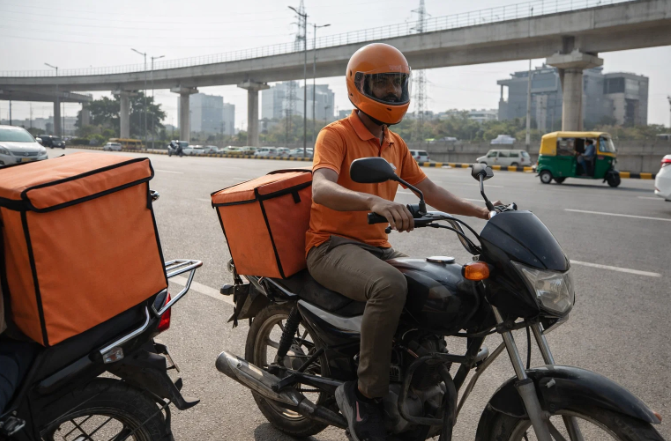
Quick commerce has rewritten the rules for urban India, making 10-minute delivery feel ordinary for metro households. However, as a market intelligence expert, it is clear that this model has largely skipped over the towns where the majority of Indians live and shop. The sector's growth is fuelled by the rapid rollout of dark stores, yet outside the top 10–15 cities, the picture changes sharply.
The "blind spot" is a structural diagnosis: quick commerce depends on high population density within a tight 2–3 km radius to cover fixed costs like rent and delivery. Tier 3 towns feature lower population density by definition, forcing a wider delivery radius that collapses the already thin margins.
Side-by-Side Competitor Comparison Table
Factor | Metro Quick Commerce | Traditional Kirana | SuperK Supermarket Franchise Model |
Primary Value | Speed & Convenience | Trust & Personal Credit | Quality, Value & Experience |
Sourcing Power | High (Venture Backed) | Low (Fragmented) | High (Regional Bulk Clusters) |
Tech Adoption | 100% Digital | 0% - 5% Manual | 100% (Android Retail OS) |
Profitability | High Burn in Tier 3 | Moderate/Unstable | Designed for Unit-Level Profitability |
Community Tie | Low/Faceless | High/Informal | High/Empowered Local Partner |
Order Pattern | Impulse/Late Night | Daily/Small Basket | Planned/Membership-driven |
What the Numbers Actually Say About Tier 3 City E-commerce Growth
While user adoption is spreading, with three in five new online shoppers since 2020 coming from Tier 3 cities, the reason they are shopping online is fundamentally different. They are not paying for seconds; they are looking for access, transparency, and pricing power.
This presents a massive opportunity for a tech-enabled retail transformation. By upgrading local retailers rather than displacing them, SuperK Supermarket has developed a model where the corporate entity and the franchisee work toward identical goals.
Competitive Advantage Identification Chart: The SuperK Supermarket Moat

Proprietary Supply Chain: Aggregating demand across 130+ stores to achieve economies of scale that independent kiranas cannot match.
Retail OS: An Android-based POS interface that replaces intimidating Windows screens with a mobile-first, user-friendly experience.
AI-Powered Inventory: Demand forecasting that learns local seasonal patterns and eliminates "dead stock".
Membership Revenue: Shifting from unpredictable footfall to a predictable, membership-driven revenue system. For example, a store with a strong member base can achieve more consistent monthly sales.
A Market Full of New Shoppers, But Different Expectations
The Tier 3 consumer prioritizes savings over speed. PwC India's survey highlights that 54% of consumers in these towns value deals more than quick delivery. This value-over-speed mindset aligns perfectly with a profitable partnership approach that offers branded, high-quality products at competitive prices.
Market Leader Position Analysis: Local Competition
The Traditional Kirana: Currently holds the "Trust Moat" through the Khata (credit) system and face-to-face relationships. The Competitive Gap: Kirana's lack the technology to offer loyalty programs, bulk pricing, or hygienic product packaging (sealed vs. open sacks).
SuperK Supermarket Strategy: "Convert, Don't Compete." We professionalize the local entrepreneur, giving them national-chain power while keeping their community roots.
The Dark Store Economics Problem
Dark stores are money-losers in Tier 3 because they require an Average Order Value (AOV) of ₹600+ to hit profitability. In small towns, grocery transactions skew toward planned weekly purchases and small daily needs often below ₹300.
Scoring System: Competitive Strength in Small Towns (1–10 Scale)
Metric | Quick Commerce | Traditional Kirana | SuperK Supermarket Model |
Unit Economics | 2/10 | 5/10 | 10/10 |
Delivery Efficiency | 9/10 (Metro only) | 4/10 | 9/10 (O2O Strategy) |
Customer Loyalty | 3/10 | 8/10 | 10/10 (Gold Membership) |
Scalability | 4/10 | 2/10 | 9/10 (Full-Stack Support) |
The Kirana Factor – A Competitor Quick Commerce Cannot Simply Outspend
No algorithm has yet replicated the informal credit and community trust of a local store owner. Kiranas provide financial lifelines through interest-free credit tied to agricultural or local income cycles. For a community-focused transformation, the retail model must be culturally sensitive.
SuperK Supermarket’s Gold Membership bridges this gap. By offering a 10% corporate-funded cashback, driving significant customer loyalty, with Gold members accounting for over 75% of total sales. This allows the local franchisee to build a loyalty "moat" without cannibalizing their own store-level margins.
What Could Actually Work in Tier 3 India
The answer is a Franchise-Owned, Franchise-Operated (FOFO) model that combines local ownership with a centralized, high-efficiency supply chain. This full-stack franchise solution provides business mentorship, advanced POS systems, and location intelligence that ensures sustainable growth.
Business Differentiator: Supply Chain Efficiency SuperK Supermarket digitizes products at the warehouse level. Every item is cleaned, packed, and sealed before dispatch, professionalizing the "messy" staples category that traditional shops often struggle to manage.
The Road Ahead – Adapt or Stay Metro
Quick commerce will likely remain an urban phenomenon while hyper-value, tech-enabled models claim the Tier 3 frontier. For the aspiring entrepreneur, the path to market dominance is clear: adopt a model that aligns with how people actually shop in small towns, planned, value-driven, and trust-based.
Time to Dominate Market: Realistic Timeline
Month 1: Awareness & Launch , Grand Opening with a target of 100–150 initial member sign-ups.
Month 2: Habit Formation , Scaling to 250–300 active members using the SuperK Supermarket app and personalized deals.
Month 3: Goal: Achieve operational break-even by growing the member base towards a consistent revenue target.
Steady State: Building a sustainable business. SuperK's model has helped franchise partners reportedly see 3-4X growth in sales volume versus standalone kiranas.
Best Local Opportunity: Recommendation Guide
Based on our location intelligence, the most profitable store placements include:
Daily Commuter Hubs: Near bus stands for capturing "on-the-way-home" essentials.
High-Density Residential: Areas with 300+ households within a 1 km radius.
Modernizing Corridors: Routes with new apartment constructions and young professionals.
Conclusion – What to Watch and What to Do Next
Quick commerce is not failing; it simply hasn't arrived in a form that respects the economic realities of small-town India. The next chapter of India's retail story will be written by platforms that earn trust, price correctly, and empower local business owners.
The structural advantages of the SuperK Supermarket membership-driven model, predictable cash flows, AI-optimized logistics, and a profitable partnership approach, provide a formidable foundation for dominance in the Indian value retail sector. For those seeking a tech-enabled retail transformation, the map to success is no longer a secret. It begins with a partnership that delivers community growth and local economic impact.
Frequently Asked Questions
1. Why is quick commerce struggling in Tier 3 cities in India? Quick commerce struggles in Tier 3 cities due to lower population density, smaller order volumes, and price-sensitive consumers.
2. What is quick commerce in India? Quick commerce refers to ultra-fast online grocery delivery services that promise orders within 10–30 minutes.
3. Why do Tier 3 consumers prefer traditional kirana stores? Tier 3 consumers prefer kirana stores for better pricing, trust, personal relationships, and flexible credit options.
4. Can quick commerce work in smaller towns? Quick commerce faces challenges in smaller towns unless it adapts to local shopping habits and improves cost efficiency.
5. What is the biggest challenge for dark store models in Tier 3 markets? Dark stores struggle in Tier 3 markets because they require very high daily order volumes to remain profitable.
6. How are kirana stores competing with quick commerce platforms? Kirana stores compete by offering local trust, faster in-person service, and personalized customer relationships.
7. What retail model works best in Tier 3 and Tier 4 towns?
Tech-enabled franchise supermarket models with local ownership and centralized supply chains work best in these markets.
8. Why is price more important than delivery speed in small towns? Consumers in small towns prioritize savings and value deals over ultra-fast delivery services.
9. How can local retailers modernize their kirana stores? Local retailers can modernize by adopting digital payments, inventory technology, loyalty programs, and better store layouts.
10. What is the future of retail in Tier 3 India? The future of Tier 3 retail lies in tech-enabled local supermarkets that combine community trust with modern retail systems.
“Turn your local kirana store into a modern tech-enabled supermarket.
Partner with SuperK Supermarket and bring organized retail to your town while building a profitable, future-ready business.”


I was looking for a platform with deep insights into kabaddi, and https://1xbetinbd.net/app-download/ delivers exactly that. The historical data and head-to-head comparisons are quite detailed. It helps me understand the game dynamics better before the big tournament starts.